

Blog
How to Reduce Marketplace Dependency and Grow Your Own D2C Website
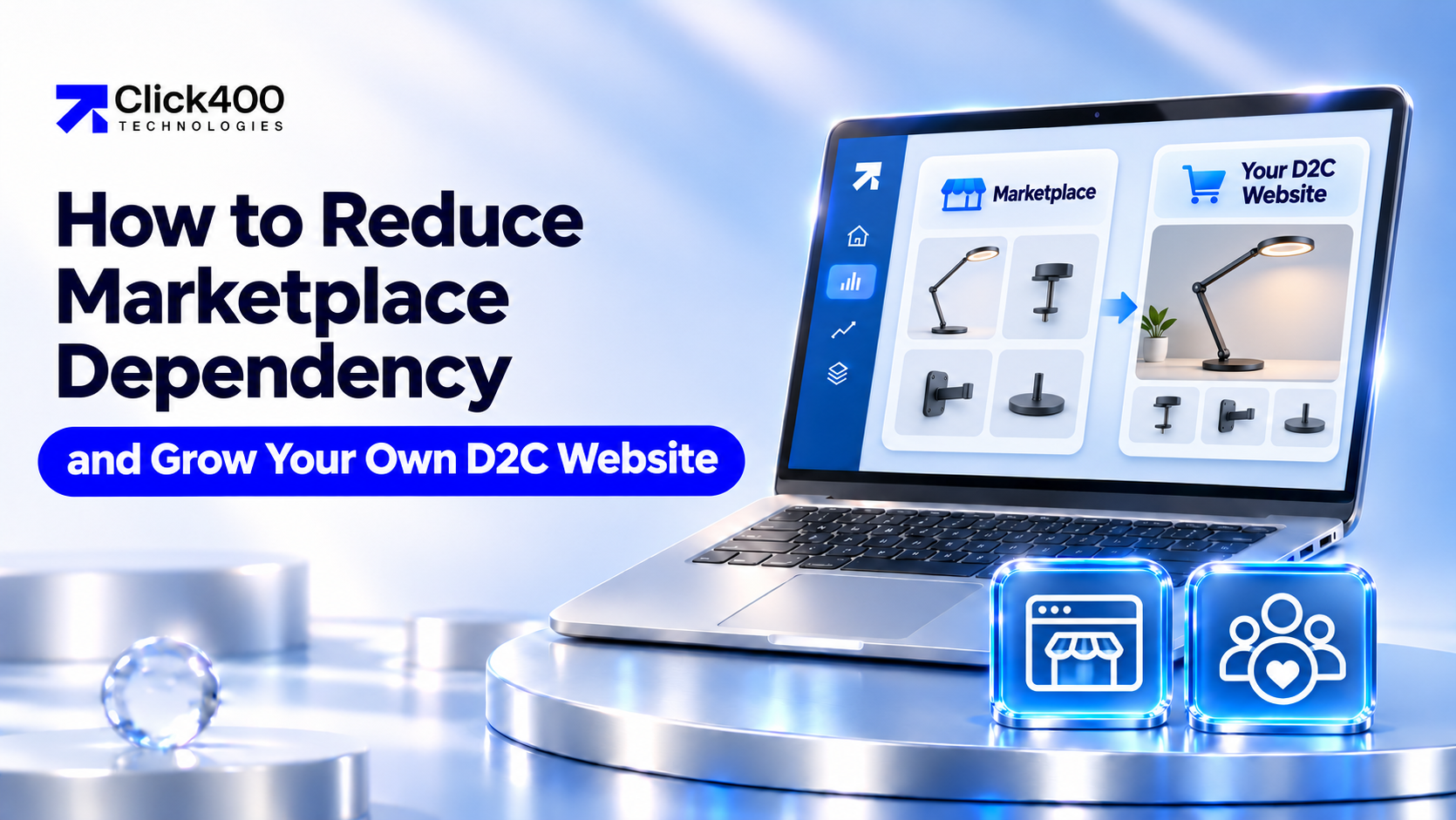
A brand can have thousands of marketplace reviews and still be starting from scratch when it opens its own website. The reviews tell shoppers that people bought and liked the product on a platform they already trust. The brand’s website has to earn that confidence in its own way. It also has to answer a question the marketplace listing may have settled years ago: why buy here?
Consider a lighting brand that sells desk lamps through Amazon and Flipkart. A marketplace shopper can compare prices and receive a lamp quickly. On the brand’s own website, that same shopper could compare light settings, check whether a clamp fits their desk, and order a compatible spare part later. Those are reasons to visit the site, and they come from what the brand knows about its products and customers.
To reduce marketplace dependency, build a direct buying experience around knowledge, selection, or service that customers value. Grow it alongside the marketplace business, then shift investment as the website demonstrates that it can generate and fulfil orders profitably.
Find Out What the Marketplace Does for Your Business
Marketplace dependency in ecommerce is often measured as a share of sales. That figure tells you how much revenue is concentrated on a platform. To decide what to build on your website, go one step further and identify what you rely on the platform to do.
Pick a bestseller and trace an order from discovery through delivery. Shoppers may find it through category search, trust it because of reviews, choose it because they know when it will arrive, and complete the purchase using a checkout they already understand. Your website needs its own way to help customers through each of those decisions.
What you depend on | What to examine | What the owned website can build |
Product discovery | What shoppers search for before they know your brand | Pages organised by use case, fit, or compatibility |
Buyer confidence | Which questions buyers ask before purchasing | Product demonstrations, verified direct reviews, and clear specifications |
Delivery convenience | Where a delivery estimate influences the sale | PIN-code checks and delivery promises you can fulfil |
After-sales support | Which issues or replacement needs recur | Easy access to instructions, spare parts, and support |
Sales volume | Which listings and promotions account for most orders | Direct offers that can attract and serve identifiable demand |
Use the findings to choose your first investment. A store that already attracts branded searches may benefit more from improving product pages and delivery clarity than from buying extra traffic. A good site with little qualified traffic has a different problem. Spending on both at once makes it harder to see which change produced the result.
Start With One Purchase Your Website Can Serve Better
When deciding how to build a direct sales channel, a common first move is to upload the entire marketplace catalogue. A smaller launch can teach you more. Find one purchase where customers already need help choosing, combining, or maintaining a product. Then build the site experience around that purchase.
Take that lighting brand. It could start with a desk setup page that helps buyers choose a clamp or freestanding base, compare light settings, and add a compatible accessory. The team can photograph the lamp on a real desk, publish measurements, and show where the controls sit. That page gives a potential customer something useful even if they first heard of the product elsewhere.
Make the offer specific enough to measure
Define what a successful direct order looks like before sending traffic. For the lamp, it might mean that shoppers select a suitable mounting option, receive the order within the quoted window, and keep it without an exchange. Record support questions and return reasons. If shoppers still order the wrong fitting, fix the selection process before promoting the page more widely.
That is a practical way to work out how to increase direct ecommerce sales with products already in demand. Address a buying decision your team can improve, then measure the result through delivery and returns. Read Click400’s guide to D2C conversion rates.
Compare Marketplace vs D2C Website Performance Across the Whole Business
A direct order changes more than the channel shown in a sales report. It changes who pays for acquisition, which fulfilment costs the brand carries, and when the business receives cash. Compare channel contribution after relevant variable costs, including product costs, payment or platform fees, fulfilment, returns, and advertising. Account for any new fixed costs separately when evaluating the investment as a whole.
Also distinguish additional sales from sales that move between channels. Suppose a brand previously sold 1,000 units a month on a marketplace, earning ₹400 contribution per unit. After a direct launch, the marketplace sells 850 units and the website sells 250. Direct contribution is ₹300 per unit after acquisition and variable costs. The website records 250 sales, while total sales across both channels rise by 100 units.
Illustrative monthly result | Before launch | After launch |
Marketplace units | 1,000 | 850 |
Website units | 0 | 250 |
Combined contribution | ₹4,00,000 | ₹4,15,000 |
Combined contribution improves by ₹15,000 before new fixed costs. That gives the brand a clearer basis for deciding what it can spend to maintain the website. A meaningful comparison also considers stock availability, seasonality, and promotions during both periods. If those changed at the same time, test again before attributing the full difference to the launch.
Give the Website Its Own Sources of Demand
Customer acquisition for D2C websites becomes more sustainable when customers have several ways to find you independently. Start with the questions your products can answer. The lighting brand might create a page on choosing a desk lamp for a small workspace, another on clamp compatibility, and a product demonstration for buyers comparing light settings. Each piece can lead to the exact product or configuration it explains.
Paid campaigns can test which of those reasons to buy resonates. Send traffic to the page that fulfils the promise made in the ad. Someone who clicks a demonstration about fitting a lamp to a narrow desk should land on a page that shows minimum desk depth and compatible mounts. Compare completed orders and contribution by landing page before increasing spend.
A D2C website growth strategy should also account for customers who arrive after seeing the brand in a store, on social media, or through word of mouth. Make the official website easy to identify, organise the catalogue by how people shop, and keep support details easy to find..
Build Customer Relationships Through Useful After-Sales Service
First-party customer data for ecommerce can help the brand serve buyers after an order. An order history can identify which replacement part fits a product. A customer’s stated preferences can improve recommendations. An opt-in can give the brand permission to send relevant marketing through the chosen channel. Collect information for a defined purpose so the team knows what it can use and why.
For durable goods, customer retention for D2C brands may begin with something as simple as making care instructions and compatible accessories easy to find. For consumables, it might mean offering an easy reorder at a useful moment. Evaluate repeat contribution and the cost of the follow-up over a period that matches how people buy. A lamp owner might return for an accessory months later, while a customer buying coffee could need a refill within weeks.
Build this relationship through your own storefront and other channels where people choose to engage with you. Marketplace order details come with restrictions on use. Amazon’s seller policy limits the use of buyer information and prohibits attempts to divert marketplace transactions. Review each platform’s current terms before using customer details, order messaging, or packaging inserts in a campaign.
How to Reduce Reliance on Amazon and Flipkart Without Disrupting Sales
Keep your productive listings active while running a contained website pilot. Choose a small set of products with dependable stock and a clear reason to buy direct. Give the pilot its own budget and agree on a review date that allows time for deliveries and returns. Define what would justify the next investment, such as enough contribution to cover recurring store costs or a reliable delivery experience in the regions you plan to target.
Once the pilot meets its criteria, give the website a defined share of the next stock intake or the next increase in marketing spend. Watch what happens to both channels. A website sale has more value if it brings in a customer who would otherwise have gone elsewhere or buys a bundle the marketplace does not carry. An existing marketplace order may be worth keeping if it would cost more to acquire directly.
Review the channel mix after periods of normal trading as well as promotions. Growing website share is useful when the website is gaining customers and the combined business is healthier. The next decision could be to extend the direct offer to a second product family, improve delivery in a promising region, or keep the current split while you test another source of demand.
Conclusion
The answer to how to grow your own D2C website begins with one purchase your brand can support especially well. Build that experience, attract shoppers who need it, and follow the orders through delivery and returns. Then decide whether the results justify moving more inventory, money, or team time into the website. That is how you reduce marketplace dependency while preserving the sales and customer reach that established platforms can still provide.
Explore Click400’s Shopify development services for D2C brands.
Frequently Asked Questions
1. How can I tell if my brand is too dependent on marketplaces?
Check how much revenue and contribution you get from each marketplace, then look at where first-time demand comes from. If one platform accounts for most product discovery and sales, stress-test what would happen if a listing lost visibility or a major promotion ended. The result tells you which direct capability to build first.
2. Should I sell the same products on my website and marketplaces?
You can sell the same core products across both. Give the website a distinct purpose through configurations, accessories, product guidance, or service. Review where demand overlaps and whether the owned website gives customers a reason to purchase from the brand directly.
3. Do I need to offer lower prices on my D2C website?
Customers may choose your website for a better fit, more selection, clearer information, or access to spare parts. Test those benefits before using a discount. If you do test a price offer, check whether the extra orders cover the margin given up.
4. How do I get my first customers to buy directly?
Start with one offer and send relevant shoppers to a page built for it. Use the brand’s existing social presence, product demonstrations, creator partnerships, or search campaigns. Make the offer, delivery estimate, and checkout easy to understand before expanding traffic.
5. Is an owned website always cheaper than a marketplace?
The economics depend on how the brand acquires and serves customers. A website can reduce some platform fees while adding marketing, payment, fulfilment, technology, or service costs. Compare contribution by product and include recurring website expenses in your overall evaluation.
6. Can I use marketplace buyer details to market my own website?
Use marketplace buyer information only as permitted by the platform and the customer’s permissions. Amazon restricts off-platform use of buyer details and attempts to divert transactions. Build your direct marketing audience through your website and channels where customers choose to hear from you.
7. What should I measure once direct sales begin to grow?
Track direct net revenue, contribution after acquisition, delivered-and-kept orders, and repeat contribution. Review them alongside marketplace contribution and inventory availability. Together, these measures show whether the website is adding value across the business.
Share this article
You May Also Like
Related Articles